There’s something about fall that naturally invites us to slow down.
The days grow shorter, the air becomes crisp, and the trees begin dropping their leaves. After the outward, expansive energy of summer, fall brings a natural shift toward turning inward, simplifying, and preparing for winter.
In Traditional Chinese Medicine (TCM), fall is associated with the Metal element and the Lung and Large Intestine. Understanding this seasonal relationship can give us a different way to think about our health—and some simple ways to support ourselves as the seasons change.
The Metal Element: Refining and Letting Go
In TCM, each season is associated with an element and a particular energetic quality. Fall belongs to Metal, which is associated with clarity, discernment, boundaries, and letting go.
Think about what happens in nature. The trees release their leaves because they no longer need them. There is a kind of wisdom in this process: knowing what to hold onto and what to let go.
Fall can invite us to do the same.
Maybe it's clearing out a closet, simplifying a schedule, releasing an old habit, or making peace with something that has changed. Metal is also associated with grief, and fall can bring a natural awareness of loss and transition.
Letting go doesn't necessarily mean forgetting or giving something up. Sometimes it simply means making room for what comes next.
The Lung: The "Delicate Organ"
In TCM, the Lung is considered the most delicate of the organs because it has a close relationship with the outside world. The Lung is said to govern respiration and qi, and its position at the uppermost part of the body makes it particularly susceptible to external influences such as wind and cold.
This is one reason fall can be a particularly important time to take care of the Lung.
From a TCM perspective, you may notice that you feel more sensitive to changes in temperature or wind, or experience things such as a dry throat, cough, nasal dryness, or a feeling that your respiratory system needs a little extra support.
The goal isn't to fear these seasonal changes, but to recognize that your body may need a little more protection and nourishment as the environment changes.
Keeping your neck and upper back protected from chilly wind, dressing appropriately for the weather, getting adequate rest, and paying attention to your breath are all simple ways to support the Lung during this season.
Fall's Dryness
Another important characteristic of fall in TCM is dryness.
As the air becomes cooler and drier, this environmental influence is thought to particularly affect the Lung, which has a natural need for moisture. When dryness becomes excessive, it can show up in TCM patterns as a dry cough, dry throat, dry nasal passages, dry skin, or constipation.
This is where the relationship between the Lung and Large Intestine becomes especially interesting.
The Lung and Large Intestine are considered paired organs in TCM. The Lung is associated with receiving and distributing, while the Large Intestine is associated with elimination and letting go. Both are connected to the theme of taking in what we need and releasing what we don't.
Supporting the body's fluids and nourishing moisture can therefore be especially helpful during the dry months of fall.
How Can You Nourish and Moisten?
In TCM, fall is often a good time to favor warm, nourishing, cooked foods and foods traditionally thought to support fluids and moisten dryness.
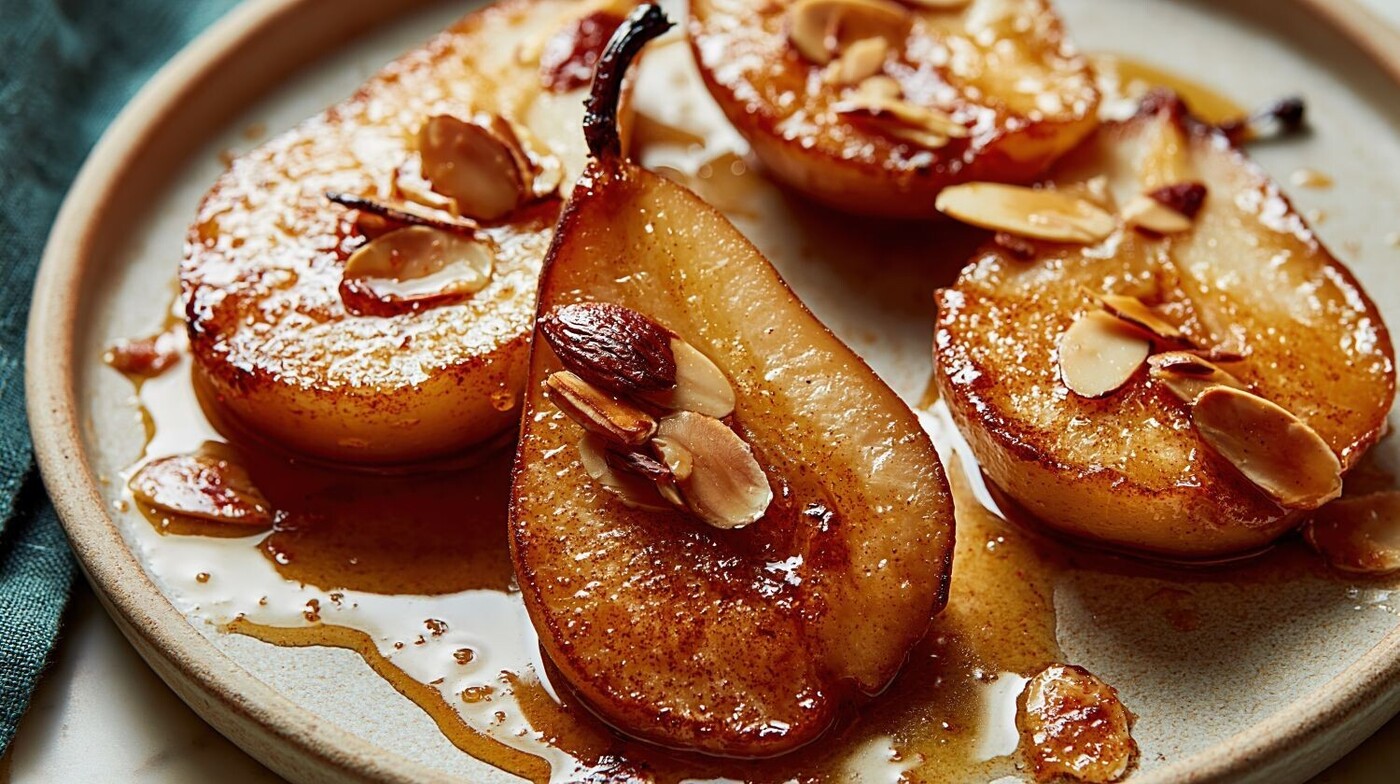
Pears are a wonderful example. In TCM food therapy, pears are considered moistening and are traditionally used to help nourish the Lung and address dryness. Cooking them makes them especially comforting as the weather gets colder.
Soups, stews, cooked vegetables, sesame seeds, almonds, honey, and other nourishing foods can also be incorporated into fall meals.
And don't forget the simple things: stay well hydrated, breathe slowly and deeply, get enough rest, and give yourself permission to move at a slower pace.
A Simple TCM-Inspired Cooked Pear Dessert
This warm, comforting dessert is an easy way to incorporate some of the foods traditionally associated with nourishing moisture in TCM.
Ingredients
-
1 ripe pear
-
1–2 teaspoons honey
-
1 teaspoon sesame seeds or finely chopped almonds
-
A pinch of cinnamon
-
1–2 tablespoons water
Directions
-
Preheat the oven to 350°F.
-
Cut the pear in half and remove the core.
-
Place the pear halves in a small baking dish and add the water to the bottom of the dish.
-
Drizzle the pears with honey and sprinkle with sesame seeds or almonds and a little cinnamon.
-
Cover loosely and bake for about 20–30 minutes, until the pear is soft and tender.
-
Enjoy warm, with a little of the honeyed cooking liquid spooned over the top.
It's simple, but that's part of the point. Supporting ourselves seasonally doesn't have to involve complicated routines or major lifestyle changes.
Moving With the Season
Chinese medicine reminds us that our health isn't separate from the natural world around us. As the environment changes, our bodies and our needs change too.
From the TCM perspective, fall is a time to protect the Lung, nourish moisture, support healthy elimination, and practice the Metal element's wisdom of discernment and release.
So as you watch the leaves begin to fall, consider what you might gently let go of—and what you want to nourish and carry with you into the season ahead.

Danielle Murphy
Contact Me